

Affiliate disclosure: This article contains affiliate links. If you buy through them, we may earn a commission at no extra cost to you. As an Amazon Associate I earn from qualifying purchases.
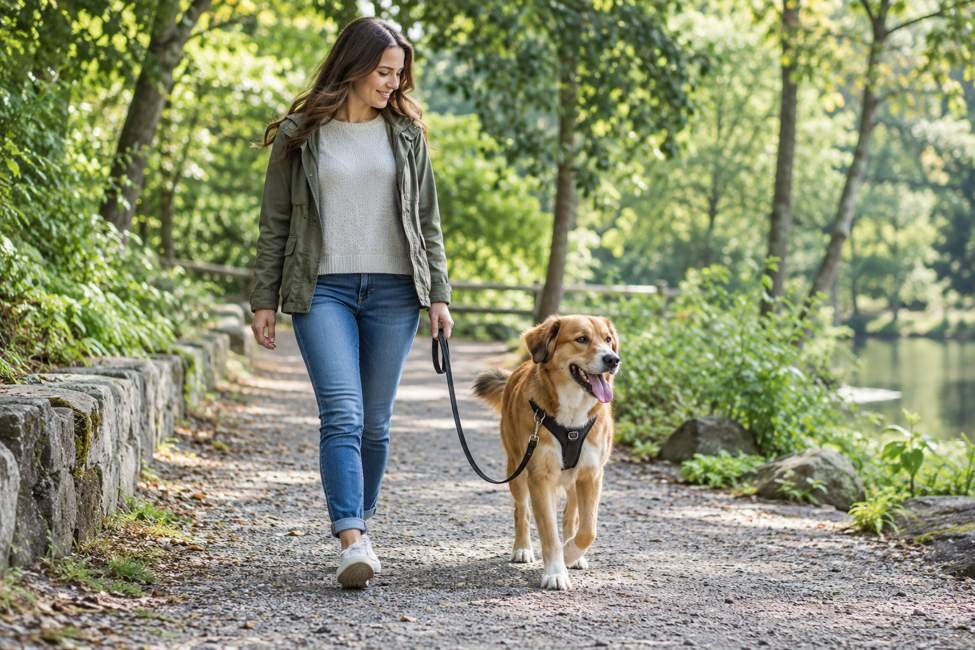
Does your dog turn a simple walk into a tug-of-war? This PetSafe Easy Walk Harness review explores its features, fit, benefits, and limitations so you can decide whether it suits your daily walks.
A no-pull harness should fit your dog comfortably and help you practice better leash manners. Choosing one involves more than picking a color or ordering by breed.
The Easy Walk is worth considering for everyday leash-pulling management. However, correct fitting and consistent training are essential to getting value from your purchase.
Review method: This is a research-based review of the standard Easy Walk Harness using PetSafe’s product information and support guides, checked October 28, 2026. No hands-on test was performed.
Table of Contents
PetSafe Easy Walk Harness Review: Quick Verdict
My research-based verdict: Shortlist the Easy Walk if your main goal is managing pulling during everyday walks. Let your dog’s comfort and the quality of the fit determine your final choice.
Before buying, consider whether you can follow the fitting instructions and make time for regular loose-leash practice. The harness is a tool you use during that process.
| Detail | What to know |
|---|---|
| Leash connection | Front chest attachment with a martingale loop. |
| Adjustment | Four adjustment points. |
| Construction | Open strap design with quick-snap shoulder and belly buckles. |
| Sizing priority | Measure chest width and girth before ordering. |
| Review scope | Standard Easy Walk Harness; check other versions separately. |
Specifications come from PetSafe’s standard Easy Walk listing.
Easy Walk Harness Features and Practical Benefits
Front attachment for walking guidance
PetSafe describes the front attachment and martingale loop as a way to redirect a pulling dog. When the dog pulls, the loop applies gradual pressure around the shoulders.
The practical appeal is having equipment you can pair with leash practice. Its usefulness depends on whether it makes outings more manageable while remaining comfortable for your dog.
Less body coverage
The standard model uses an open strap design rather than a broad fabric vest. PetSafe presents this reduced coverage as lightweight and breathable.
Think about your priorities when comparing styles. Some owners prefer minimal material, while others want padding; either preference still requires checking the individual fit.
Easy-to-identify straps
A contrasting belly strap helps you identify which way the harness goes. This is a useful detail while you learn the setup.
Multiple adjustment points also mean you should take your time with the first fitting. Tightening every section equally does not necessarily produce the right result.
Design details come from the official product description.
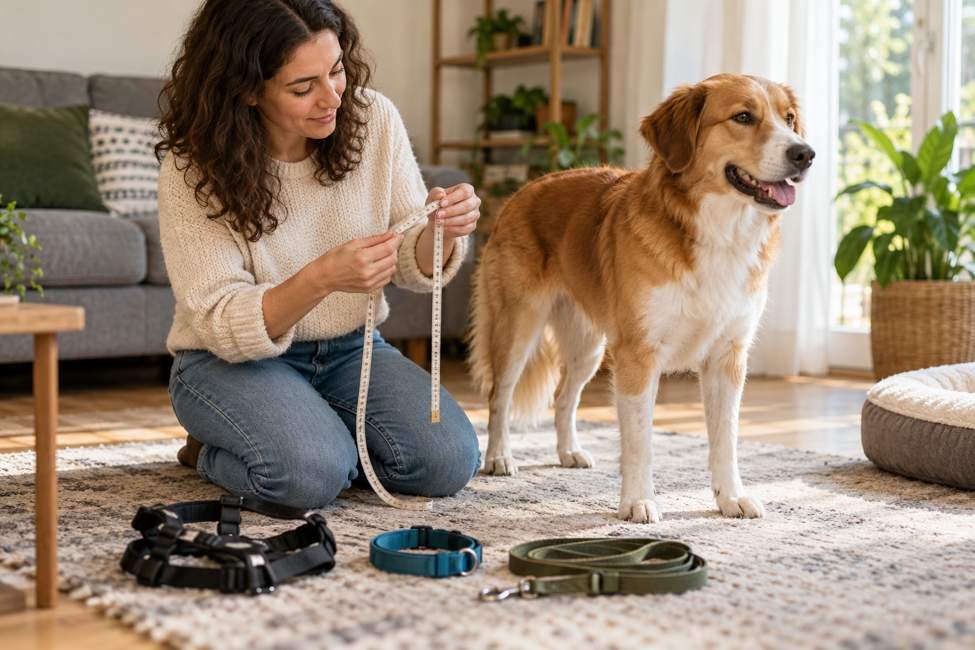
The linked Amazon listing selects Medium in Red/Black. Check your dog’s chest and girth measurements and select the appropriate size before ordering.
PetSafe Easy Walk Harness Sizing and Fit
Sizing deserves careful attention before you order. A familiar breed label or approximate weight cannot tell you exactly how equipment will sit on your individual dog.
Take two measurements
With your dog standing comfortably, measure across the chest from about one inch behind one front leg to the equivalent point behind the other. Then measure girth around the deepest part of the rib cage behind the front legs.
PetSafe advises matching both measurements. For dogs between sizes, its guidance recommends the larger size or the best girth match.
Follow the official measuring instructions before selecting a size.
| Size | Chest width | Girth |
|---|---|---|
| Petite | 7–8 | 12–17 |
| Petite/Small | 8–9 | 13–18 |
| Small | 9–12 | 15–21 |
| Small/Medium | 11–13 | 19–26 |
| Medium | 12–15 | 22–32 |
| Medium/Large | 14–18 | 24–34 |
| Large | 16–21 | 27–40 |
| Extra Large | 17–24 | 32–49 |
Source: PetSafe’s U.S. size chart, checked October 28, 2026. Confirm the chart on your exact listing because other versions, regions, or older packaging may differ.
Adjust the foundation first
- Choose a quiet place. Keep your dog standing during fitting.
- Position the shoulder strap. The side O-rings should sit above and behind the front legs.
- Adjust the belly strap. The shoulder and belly sections should form a vertical line.
- Check snugness. PetSafe specifies space for one or two fingers beneath the shoulder strap.
- Balance the chest adjustments. Keep the martingale centered and the chest strap horizontal, without sagging or riding toward the neck.
- Recheck after a few minutes. Dogs may tense during their first fitting.
The finished fit should form a sideways T, without the chest strap pulling the girth section forward. Consult PetSafe’s illustrated fitting guide.
Reassess rubbing rather than ignoring it
PetSafe identifies a loose girth section, an overly tight chest strap, and an undersized harness as possible reasons straps move into the armpits. Excessive pulling can also contribute to loosening.
If irritation appears, stop using the harness until the issue is addressed. Repeatedly tightening the front section may make the fit worse.
See the rubbing and loosening troubleshooting guide. If you cannot obtain a comfortable fit, consider another design.
PetSafe Easy Walk Harness Pros and Cons
These are design-based buying considerations rather than findings from a wear test.
Pros
- Focused purpose: Designed around the practical challenge of leash pulling.
- Clear setup resources: Manufacturer illustrations help you assess the fit.
- Several sizing options: More choice than a simple small, medium, or large selection.
- Simple priorities: You can focus on fit and walking needs rather than numerous extra functions.
Cons
- Careful setup required: You need to understand how the adjustable sections work together.
- Comfort needs monitoring: Check how the harness sits as your dog moves, as well as when standing still.
- Training still matters: Equipment cannot provide consistent reward timing or practice for you.
- Other activities need separate assessment: This review does not establish suitability for sports, car travel, or escape management.
Who Should Consider the Easy Walk Harness?
Owners working on everyday leash manners
This is the clearest reason to shortlist it. Start with a specific walking goal, then assess whether the harness helps you work toward that goal comfortably.
For example, practice a few calm steps near home before trying a busy route. A manageable task makes progress easier to observe.
Owners prepared to check fit
If you like having a repeatable walking routine, this design may appeal. Be willing to inspect strap positions and make adjustments when needed.
If measurements seem contradictory or the harness never sits as illustrated, get sizing assistance before continuing.
When individual guidance comes first
If your dog becomes distressed, repeatedly tries to escape equipment, or lunges hard enough that you cannot safely manage the situation, seek help from a qualified professional. A product review cannot identify the cause or provide an individual behavior plan.
For existing pain or mobility concerns, discuss equipment selection with your veterinarian.
Other Harness Designs to Compare
Use these questions as a shopping framework. This is not a ranking of tested alternatives.
| Design | What to investigate |
|---|---|
| Padded harness | Where the padding sits and whether you can inspect the skin beneath it. |
| Y-front harness | How the chest section and leg openings fit during normal movement. |
| Dual-attachment harness | Whether the manufacturer supports your intended leash setup. |
| Escape-management design | Suitability for your dog’s history, supported by individual fitting advice. |
Write down your two main requirements before shopping. Knowing whether fit, handling, or a particular activity matters most makes comparisons more useful.
Walking and Training Tips
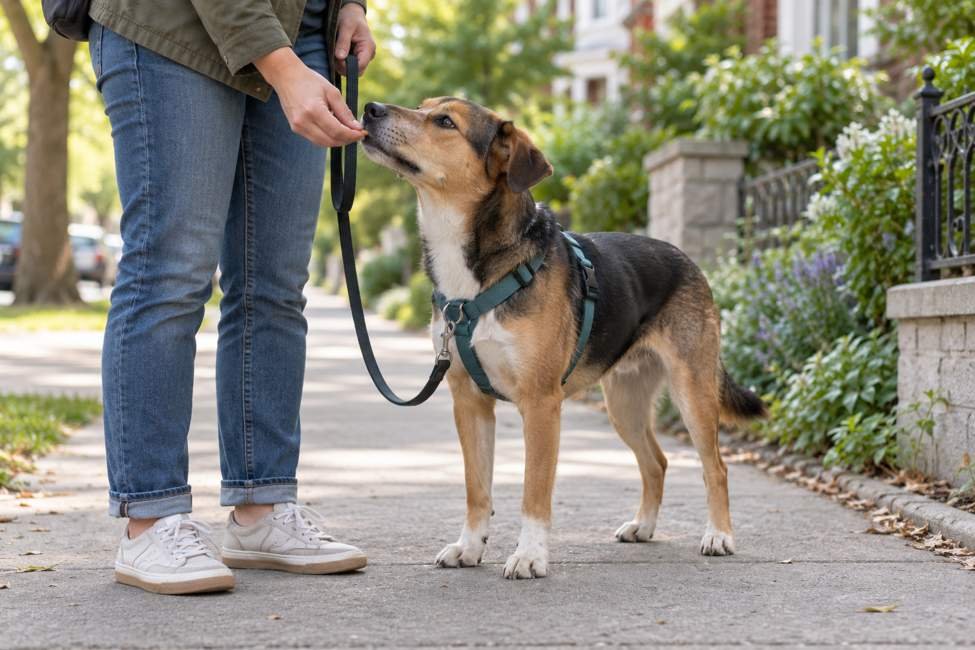
PetSafe recommends a standard four-to-six-foot nylon leash and advises against retractable or bungee leashes with this harness. It also says to remove the harness between walks.
Its instructions advise slowing or stopping when your dog pulls, avoiding sudden leash tugs, and rewarding a return to your side with a slack leash. Learning time varies between dogs.
Read the complete Easy Walk training instructions before starting.
Make your first goal small
My practical suggestion is to begin on a short, quiet route. Decide what you will reward before starting so you are ready when your dog offers it.
A few comfortable steps are a useful beginning. Build from there rather than treating your first outing as a test of an entire neighborhood walk.
Keep simple progress notes
After early outings, record whether the fit stayed stable, whether your dog seemed comfortable, and which situations were difficult. These observations are more useful than judging everything by one exciting encounter.
Change your plan if the equipment is uncomfortable or the surroundings are too challenging. Your dog’s comfort belongs in your definition of progress.
What to Check Before Buying
- Exact model: Match the listing to the standard version discussed here.
- Measurements: Record chest width and girth.
- Total cost: Compare checkout price, delivery, and equipment you still need.
- Return conditions: Check current seller terms in case the fit is unsuitable.
- Expectations: Plan for practice rather than assuming the purchase alone teaches leash manners.
I would prioritize a suitable size and clear return process over a small discount. Equipment is poor value if you cannot use it comfortably.
Common Questions About the Easy Walk Harness
Will it stop pulling immediately?
Do not buy it on that assumption. Evaluate it as a training aid over consistent practice rather than expecting a guaranteed instant result.
Can my dog wear it all day?
PetSafe says to remove it between walks. Make removal part of your routine when you return home.
What if my dog falls between sizes?
Check both measurements against the current listing and seek sizing support if neither option seems suitable. Avoid relying on weight alone.
Does this review cover the Deluxe version?
No. Compare other versions separately, including their construction and exact sizing guidance.
Was the harness tested for this article?
No hands-on test was performed. This review combines manufacturer documentation with clearly identified buying considerations.
Final Thoughts: Is the PetSafe Easy Walk Harness Worth Considering?
The Easy Walk is worth considering when your goal is making everyday leash practice more manageable. The deciding question is whether it fits comfortably and helps you carry out that practice.
Begin with measurements, review fitting instructions before ordering, and check return conditions. Once it arrives, assess the fit in a quiet setting before heading into a demanding environment.
Keep expectations practical: look for comfortable wear, manageable outings, and opportunities to reward the behavior you want.
My recommendation in this PetSafe Easy Walk Harness review is to choose it for a specific walking need, then let your dog’s fit and comfort guide your final decision.
For a separate look at learning at home, read our Brain Training for Dogs review. Learn more about our editorial approach.